

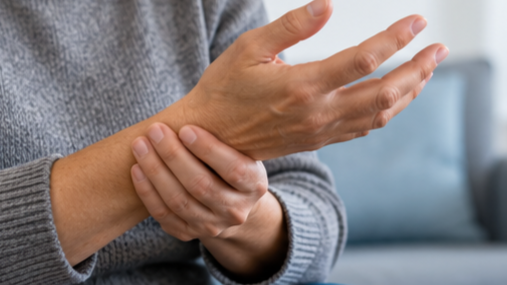
A sore arm or brief fatigue after a flu shot is familiar to many people. New weakness, tingling, numbness, balance problems, or difficulty walking are different and deserve medical attention.
Perhaps the first sign was subtle. Your feet began tingling. Climbing stairs suddenly felt harder. Your legs felt unusually weak, or you needed help standing or walking. For some families, the change becomes more obvious when a loved one falls, needs emergency care, or develops weakness that continues to spread.
Those symptoms have many possible causes, but they can also occur with Guillain-Barré syndrome, or GBS, a rare neurological disorder involving damage to the peripheral nerves.
GBS often follows an infection, and researchers have also studied its possible association with seasonal influenza vaccination. CDC reports that the evidence has varied across flu seasons. When an increased risk has been detected after flu vaccination, it has generally been about one to two additional GBS cases per million vaccine doses.
For New Jersey families dealing with sudden neurological symptoms after a flu shot, the immediate priority is medical care. Once the person's condition is being evaluated, the vaccination date, diagnosis, medical history, and progression of symptoms can also become important in determining whether the circumstances fit a potential claim under the federal Vaccine Injury Compensation Program.
How Is Guillain-Barré Syndrome Different From SIRVA?
This article is Part 2 of our vaccine injury series. In Part 1, we discussed SIRVA after a vaccine, which primarily involves shoulder pain and restricted movement associated with vaccine administration.
Guillain-Barré syndrome is fundamentally different.
GBS is a neurological disorder in which the immune system damages the peripheral nerves, which carry signals between the brain and spinal cord and the rest of the body. The condition can cause muscle weakness, abnormal sensations, difficulty walking, and sometimes paralysis. Most people recover, although some continue to experience weakness or nerve damage, and severe cases can affect the muscles involved in breathing.
That difference matters because GBS is not simply prolonged soreness near the injection site. It involves neurological symptoms and a clinical pattern that requires medical evaluation.
What Neurological Symptoms After a Flu Shot Need Medical Attention?
GBS does not look exactly the same in every person. One recognizable pattern is weakness that begins in the legs and progresses upward, sometimes over hours or days. People may first notice unexpected difficulty walking or climbing stairs.
Symptoms that warrant prompt medical attention include:
- New tingling or “pins and needles” sensations
- Weakness in the legs or arms
- Difficulty standing, walking, or climbing stairs
- Problems with balance or coordination
- Numbness or other unusual sensations
- Facial weakness
- Difficulty swallowing or speaking
- Weakness that spreads or worsens rapidly
- Difficulty breathing
Trouble breathing, swallowing, or rapidly progressive weakness requires urgent medical attention.
These symptoms do not establish that someone has GBS or that a vaccine caused the condition. GBS frequently follows infection with a virus or bacteria, and other neurological conditions can produce similar symptoms.
The important first step is therefore diagnosis, not assumption.
Why Does the 3-to-42-Day Window Matter in a Flu Shot GBS Claim?
For seasonal influenza vaccines, the federal Vaccine Injury Table currently lists Guillain-Barré syndrome with a period of 3 through 42 days between vaccination and the first symptom or manifestation of onset.
That does not mean every person diagnosed with GBS during that period automatically qualifies for compensation.
The Vaccine Injury Table also contains a detailed definition of GBS. For the common GBS subtypes, the regulation looks at clinical features such as weakness on both sides of the body, reduced or absent reflexes, how the illness progresses, how quickly the person reaches their greatest weakness, and whether another diagnosis better explains the symptoms.
The VICP also has a separate severity requirement. Generally, the injury must result in residual effects or complications lasting more than six months after vaccination, result in inpatient hospitalization and surgical intervention, or result in death. Meeting the 3-to-42-day timing window does not eliminate that requirement.
This is why identifying the first symptom or manifestation of GBS can matter so much.
A family may remember the day someone was admitted to the hospital, needed a walker, or received a GBS diagnosis. But the medically and legally significant timeline can begin earlier if initial tingling, weakness, difficulty with stairs, or another symptom is later identified as the first manifestation of the condition.
A useful timeline can include:
- The date of the flu vaccination
- Where the vaccination was given
- When tingling, weakness, or other neurological symptoms first appeared
- Which part of the body was affected first
- Whether weakness spread or worsened
- When walking, standing, climbing stairs, or other activities became difficult
- When the person first sought medical care
- When a neurologist became involved
- Testing, diagnoses, hospitalization, and treatment
- Any infection or illness that occurred before the neurological symptoms began
That last point is particularly important because GBS commonly follows infections, and the presence of another plausible explanation can be significant when a vaccine claim is evaluated.
Does GBS Within 3 to 42 Days Automatically Mean the Flu Shot Caused It?
No.
The timing window is important, but timing alone is not enough.
When GBS begins within the Table's 3-to-42-day period and the case also satisfies the Table's definition and other requirements, the petitioner can receive the benefit of a presumption that the vaccine caused the injury. That presumption is not absolute. The government can rebut it by establishing that the injury was due to a factor unrelated to the vaccination.
If the Table requirements are not satisfied, a claim can still potentially be pursued through the VICP based on the medical evidence and the program's other requirements. In that situation, the petitioner must establish that the vaccine caused the condition or significantly aggravated a preexisting condition.
For a GBS claim, that makes the medical record particularly important. The evaluation can involve the pattern of weakness, neurological examinations, reflex findings, testing, symptom progression, prior infections, other medical conditions, and whether another diagnosis provides a better explanation.
This is also why a diagnosis appearing in a chart does not end the analysis. The question is whether the medical evidence and timeline satisfy the requirements applicable to the particular vaccine injury claim.
What Evidence Can Help Clarify a Possible GBS Vaccine Claim?
Because GBS can develop quickly, families sometimes accumulate records from several different providers in a short period: an emergency department, hospital, neurologist, rehabilitation facility, physical therapist, and primary-care physician.
Keeping those records organized can make the sequence of events easier to understand.
Relevant materials can include:
- Vaccination documentation
- Emergency room and hospital records
- Neurology records
- Nerve-conduction or electromyography reports, if performed
- Cerebrospinal fluid or other diagnostic testing, if performed
- Rehabilitation and physical-therapy records
- Medication and treatment records
- Records concerning infections or illnesses before symptom onset
- Work restrictions or disability documentation
- Notes showing when assistance with walking, transportation, or daily activities became necessary
The Vaccine Injury Table recognizes that certain electrophysiologic and cerebrospinal-fluid findings can support a GBS diagnosis, while also noting that these studies can be normal early in the illness.
For families, the goal is not to assemble evidence to prove a conclusion they have already reached. It is to preserve an accurate record of what happened so doctors and attorneys can assess the diagnosis, timeline, and possible causes based on the actual medical history.
How Can GBS Change Daily Life?
A neurological condition that affects strength and mobility can alter daily life quickly.
Someone who was working and driving independently may suddenly need help walking, bathing, using stairs, getting to appointments, or completing household tasks. A spouse or adult child may become a caregiver. Rehabilitation can continue after hospitalization, and returning to work may take time.
Those effects can also become relevant to compensation if a VICP petition succeeds.
If compensation is awarded, it can include qualifying unreimbursable medical and rehabilitation expenses, lost earnings, and compensation for pain and suffering, subject to the Vaccine Act's requirements and limits. Compensation for pain and suffering and emotional distress is capped at $250,000.
The important point is that a GBS claim concerns more than the diagnostic label. The medical records and other evidence should show what actually happened to the person's health, mobility, work, independence, and need for care.
What Should You Do After Neurological Symptoms Begin?
The first step is medical care.
Do not wait for a legal evaluation before seeking treatment for new or worsening neurological symptoms. If weakness is progressing rapidly or breathing or swallowing becomes difficult, seek emergency medical attention.
Once immediate medical needs are addressed:
- Keep the vaccination record.
- Write down when the first neurological symptoms appeared.
- Record how the symptoms progressed.
- Keep hospital, neurology, rehabilitation, and therapy records.
- Preserve information about recent infections or illnesses.
- Document work restrictions and assistance needed with ordinary activities.
- Avoid assuming either that the vaccine caused the condition or that no vaccine claim exists before the medical evidence has been reviewed.
As discussed in Part 1 of this series, VICP injury petitions are generally subject to a three-year filing deadline measured from the first symptom or manifestation of onset or significant aggravation. Because identifying that first symptom can be especially important in a GBS case, families should not assume that the deadline begins on the date of diagnosis.
Talk to the Vaccine Injury Help Center About GBS After a Flu Shot
When someone who was walking, working, and living independently develops rapidly changing neurological symptoms, the family often has to manage several problems at once: medical treatment, rehabilitation, work disruption, caregiving, and unanswered questions about what caused the condition.
At the Vaccine Injury Help Center, Sadaka Law represents people in New Jersey and nationwide who are navigating medically complex vaccine injury claims and the specialized federal Vaccine Injury Compensation Program.
If you or a loved one developed Guillain-Barré syndrome or significant neurological symptoms after a seasonal flu vaccination, we can review the vaccination date, symptom progression, medical records, and other relevant evidence and explain whether the circumstances warrant further evaluation under the VICP.
Contact the Vaccine Injury Help Center to discuss your situation and learn more about your options.
Disclaimer: The articles on this blog are for informational purposes only and are not a substitute for legal advice or an attorney-client relationship. If you are seeking legal advice about your individual circumstances, please contact the firm directly.